
Jaguar And Cambridge University Are Working On Touchless Touchscreens For Your Car
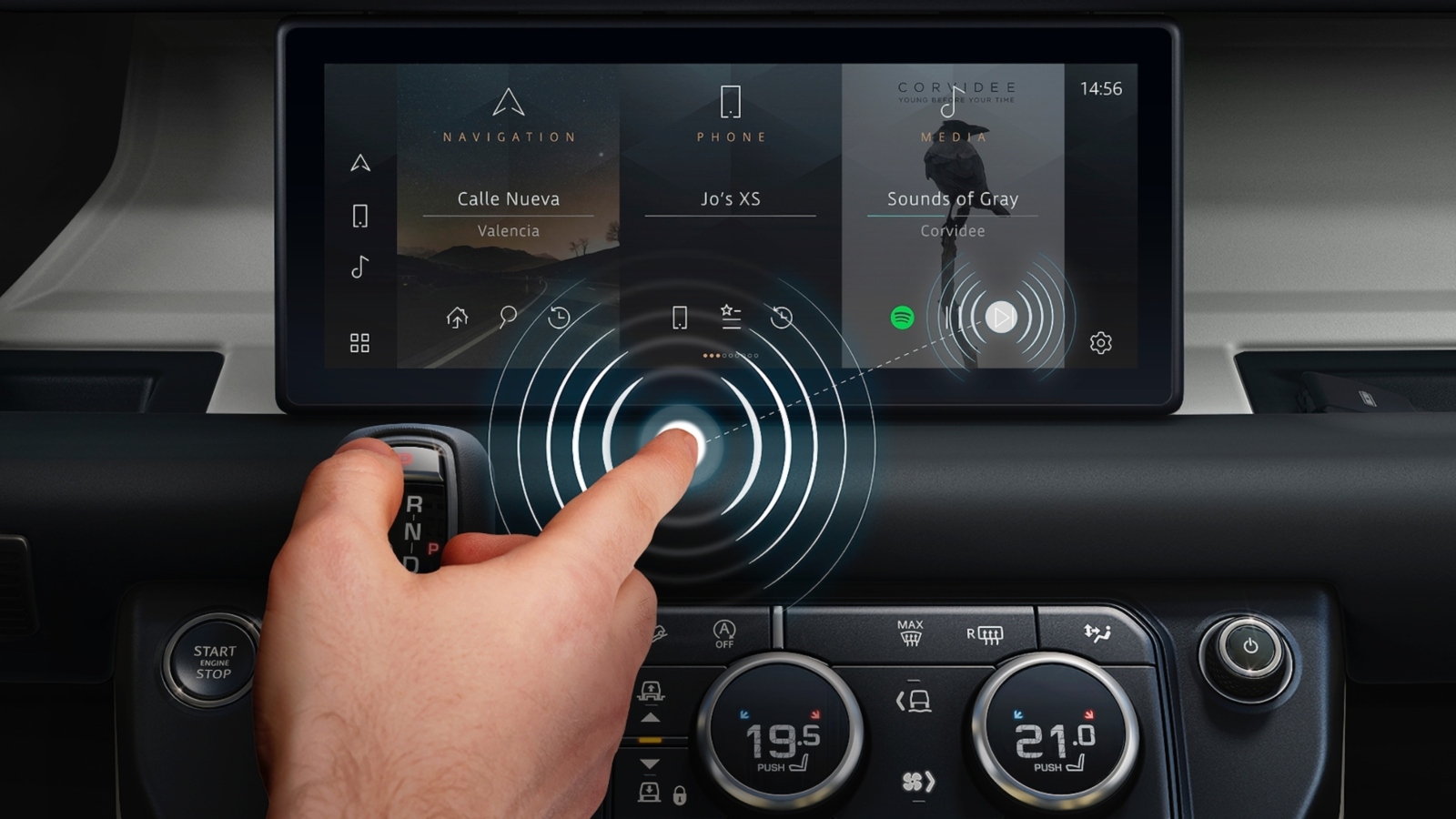
Touchscreens, a fixture of modern life, have undoubtedly made driving more convenient. You can map out your destination, control the temperature or choose a new song, all with a simple tap of your finger. But what if you didn’t actually need to touch them to make them work? As counter-intuitive as that may sound, Jaguar Land Rover is actually hard at work on the world’s first touchless touchscreen, according to a press release. The British automaker has teamed up with engineers from the University of Cambridge to develop a device that will use “predictive touch” so that you’ll never have to make physical contact with it again.
The technology, which the two groups have already patented, uses artificial intelligence and sensors to identify what your finger is pointing at and select your desired option without you having to touch the screen. Even better, the more you use the device, the quicker and more accurate it will become. This is because machine learning, working with with vision- and radio frequency-based sensors, will pick up and identify your gesture earlier over time, making the interaction even faster.
Jaguar Land Rover and Cambridge believe the technology will not only make driving easier but safer as well. Studies by the university found that the touchless touchscreens require 50 percent less effort to use. In theory, this would not only reduce the number of accidental inputs but keep the driver’s attention focused on the road. The two groups also believe that touchless touchscreens will help reduce the spread of bacteria and viruses, no small feat in Covid-19 era.
“Touchscreens and other interactive displays are something most people use multiple times per day, but they can be difficult to use while in motion, whether that’s driving a car or changing the music on your phone while you’re running,” said Cambridge professor Simon Godsill. “We also know that certain pathogens can be transmitted via surfaces, so this technology could help reduce the risk for that type of transmission.”
Although Jaguar Land Rover did not mention when or if the technology would appear in any of its vehicles, it certainly doesn’t sound that far off. Another press release from Cambridge says that the device has already reached “high technology readiness levels” and can seamlessly be integrated into already-existing interactive displays.
You May Also Like